
Why CPG Companies Need a Smarter Partner: The Power of Industry-Specific, Practical Expertise
By Richard Davis, CEO, Demand Chain AI The Big Picture Consumer packaged goods companies are facing fast-moving headwinds. Pandemic-era channel disruption, e-commerce acceleration, supply chain volatility and consumer tastes that change overnight: this is a new era that demands new strategies. Success no longer comes from scale alone. Instead, it’s about agility and context—a combination […]
The Agentic AI Revolution in CPG: Reimagining Demand Forecasting & Production Planning
Emil Beloglavec, AI Chief Architect at Demand Chain AI, highlights how Generative AI is transforming CPG operations from static, reactive processes to adaptive, intelligent systems. By using real-time data, continuous learning, and conversational collaboration, GenAI enables dynamic forecasting, rapid replanning, and optimized production. Early adopters are already seeing major gains such as reduced forecast errors, improved inventory efficiency, and millions saved through reduced waste, making GenAI a reinvention of how CPG companies compete.
Integrating AI into Your Supply Chain Planning: 3 Key Risks Every CPG Brand Must Know
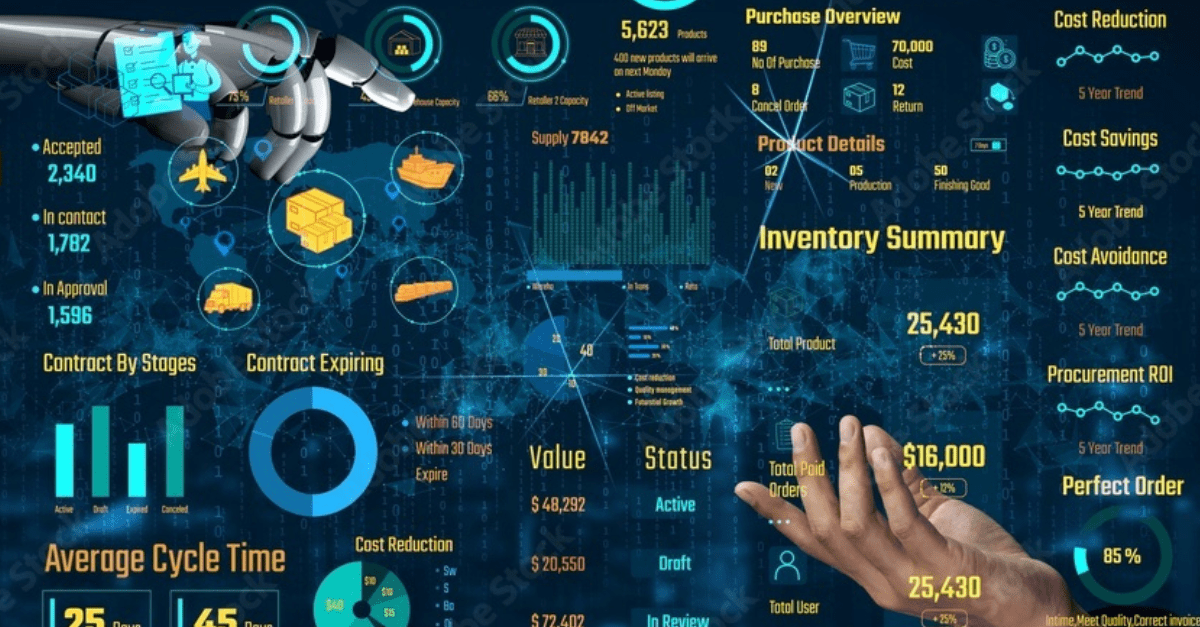
Artificial intelligence is transforming supply chain planning for CPGs and retailers—bringing both opportunity and risk. Dr. Kevin O’Flynn explores how AI can drive forecasting accuracy, inventory efficiency, and agility, while also exposing organizations to data, technology, and governance pitfalls. Success demands careful planning, smart adoption, and human oversight.
Transportation Optimization & Lane Forecasting

In today’s volatile supply chain environment, transportation optimization and lane-level forecasting are critical to controlling costs and improving service. In this article, Rob Haddock explores how AI-powered insights, strategic carrier partnerships, and granular volume forecasting can transform transportation performance. Discover how smarter planning—lane by lane, week by week—builds a more resilient and cost-effective logistics strategy.
Optimizing Procurement in the Consumer Packaged Goods Industry
In this CGT Consumer Goods Technology article, Jody Naragon and Lisa VanFulpen—advisors at Demand Chain AI—explore how strategic procurement is driving growth in the consumer packaged goods industry. By involving procurement early in decision-making, businesses can enhance supply continuity, reduce costs, and align operations with demand. The article highlights key differences between direct and indirect procurement and showcases real-world success stories that demonstrate procurement’s growing impact on business performance.
Unlocking Efficiencies in CPG: Integrating Demand Sensing with Production Planning
In the fast-paced world of Consumer Packaged Goods (CPG), optimizing efficiency is crucial. In this article, Richard Davis, CEO of Demand Chain AI, explores the transformative power of integrating demand sensing with production planning. He outlines how leveraging real-time data and advanced analytics can enhance forecasting accuracy, streamline operations, and reduce waste. Discover how bridging the gap between demand insights and production strategies can drive profitability and ensure a responsive supply chain in an ever-evolving market.
AI in Revenue Growth Management: Challenges, Opportunities & Best Practices

Revenue growth management (RGM) and trade promotion optimization (TPO) are rapidly evolving due to shifting consumer behaviors and the rise of AI. Consumer goods companies face challenges from retailer dominance, fragmented data, and the need for timely execution. AI transforms RGM and TPO by enabling rapid scenario planning, improved targeting, and deeper insights, while democratizing access to data-driven strategies. Best practices for AI integration include investing in training, maintaining a holistic view, and building diverse teams. By leveraging AI effectively, businesses can navigate competitive landscapes and drive sustainable growth. Hear from Demand Chain AI experts assist CPG companies in overcoming these challenges daily.
The Future of the Automated Supply Chain

In the rapidly evolving field of supply chain management, Richard Davis, CEO of Demand Chain AI, provides valuable insights into the role of AI. Davis is quoted emphasizing the transformative potential of AI solutions, which can handle menial tasks and free planners to focus on larger projects. He also advises against overusing AI, suggesting a thoughtful business case and solid governance to ensure optimal results.
Understanding Unconstrained Demand — And Planning Appropriately

Unconstrained demand is the ultimate game-changer for consumer goods companies. Are you truly prepared to navigate inflation, fickle customer preferences, and unpredictable market disruptions? Discover how advanced forecasting processes, cross-departmental collaboration, and AI-driven tools empower brands to capture untapped potential, optimize supply chains, and enhance customer satisfaction. Unlock the secrets to building resilient, forward-looking plans.
How to Meet Unconstrained Demand in a Constrained World, Part 2

Unconstrained demand presents both challenges and opportunities for CPG companies and retailers. Part 1 of this series defined unconstrained demand and its challenges. In part 2, Chris Lauchner and Geoff Shive will explore how AI-powered solutions like predictive analytics, real-time monitoring and segmentation are optimizing operations, inventory management and supply chain synchronization, enhancing operational efficiency, reducing costs, and growing market share.